
Service guide — Gulf Coast
Dead Animal Removal in Mobile, AL
Quick answer
Cost figures compiled from national cost data and published local pricing, September 2026. Every job is quoted after an inspection — treat these ranges as orientation, not a bid.
Talk to a local wildlife specialist now
Serving Mobile, Baldwin County and Pensacola — describe what’s going on and get matched by phone.
Call (251) 486-467124/7 — speak with a local specialist now.
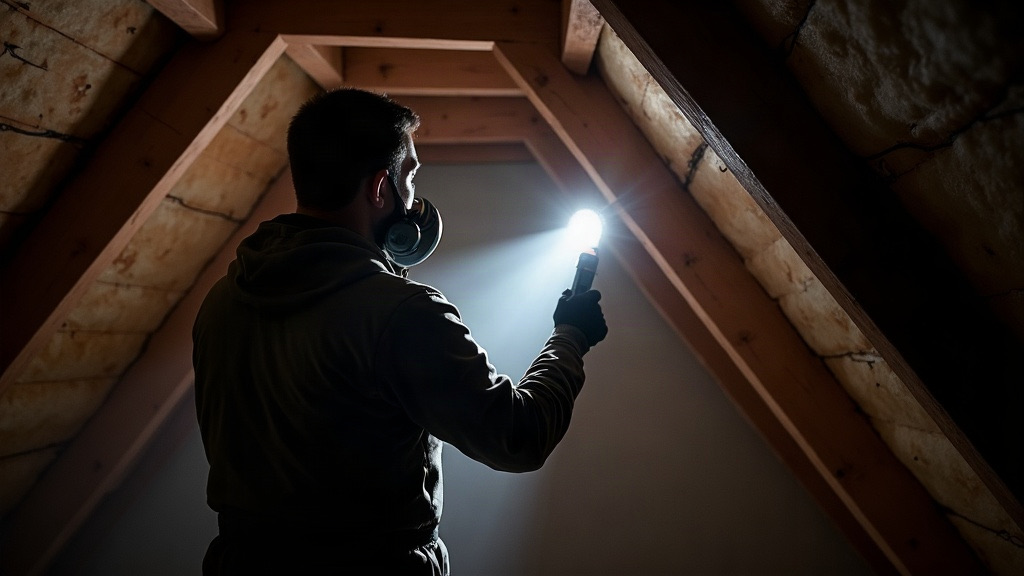
Where dead animals hide
The smell usually appears before the source is obvious. Common scenarios around Mobile and Pensacola:
- In the attic — a rat or squirrel that ate poisoned bait elsewhere, or an animal trapped when someone sealed an entry without checking.
- Inside a wall void — the classic "smell in one room" case; animals fall down wall cavities from the attic and can't climb out.
- Under the house / in the crawlspace — opossums, stray cats and raccoons den under Gulf Coast pier-and-beam homes and sometimes die there.
- In the yard — larger carcasses (opossum, raccoon, armadillo) in bushes or under decks, often found by the dog first.
- In HVAC ducts or chimney flues — less common, but a distinctive way to distribute the smell through the whole house.
How the removal process works
- Narrow the location — technicians literally follow their noses, checking the attic, crawlspace and wall voids near the strongest odor. Fluorescent odor-detection and inspection cameras help in walls.
- Remove the carcass — sometimes through a small, patchable drywall cut if the animal is in a wall void. A good crew cuts cleanly and tells you upfront.
- Treat the area — enzyme-based odor neutralizers and disinfectant; the oily residue a decomposing carcass leaves is what keeps smelling, so treatment matters as much as removal.
- Figure out how it got in — a dead animal usually means a live-animal entry point. Smart companies check and quote exclusion so the sequel never happens.
What dead animal removal costs
- Accessible carcass (yard, attic floor, crawlspace): roughly $150–$250.
- Wall-void removal with a drywall cut: roughly $250–$400.
- Odor treatment / insulation replacement: quoted by scope, from a small treatment fee up to a full attic restoration.
More on the cost page. Companies offering carcass removal are listed in the directory.
When the city or county will help — and when they won't
In Mobile and Escambia County, animal services will generally collect dead animals on public roads and rights-of-way — call them for roadkill in the street. They do not remove carcasses from private property, and they won't come for the smell in your wall. That job belongs to a private wildlife removal company, which is exactly the "who do I even call for this?" gap these services fill.
FAQ
Frequently asked questions
How long will the smell last if I do nothing?
In Gulf Coast heat and humidity, a rat-sized carcass smells strongly for about 2–3 weeks; a raccoon or opossum in a wall can stink for 6 weeks or more. Heat makes it worse — the smell intensifies when the AC cycles or afternoon sun hits that wall. Removal plus enzyme treatment ends it in a day.
Is a dead animal in the wall a health hazard?
Mostly it's a severe nuisance rather than an acute danger, but carcasses breed flies and can contaminate surfaces, and handling one without protection is a bad idea. If the animal died from poison, keep pets away from any droppings or carcass the dog might find in the yard.
Why did the animal die in my house?
The three usual causes: it ate rodenticide somewhere (yours or a neighbor's), it got trapped when an entry point was sealed, or it simply died of illness or injury in a sheltered spot. This is one reason pros don't recommend poison for attic rodents — the rat dies in the wall and you get a second problem.
Will the smell come through the whole house?
It spreads surprisingly far — air leaks around recessed lights and attic hatches carry odor, and a carcass near ductwork perfumes every room. But the source is almost always within a few feet of the strongest-smelling spot, which is how technicians find it.
Can I remove it myself?
If you can see and reach the carcass — gloved hands, double bag, outdoor trash, then disinfect the spot — sure. The jobs worth paying for are the hidden ones: inside walls, deep in insulation, or under a low crawlspace, where finding the animal is 90% of the work.
Ready to get the animal out — and keep it out?
Call now — speak with a local wildlife specialist serving Mobile, Baldwin County and Pensacola. 24/7.