
Service area — Fairhope & the southern Eastern Shore
Wildlife Removal in Fairhope, AL
Quick answer
Cost figures compiled from national cost data and published local pricing, September 2026. Every job is quoted after an inspection — treat these ranges as orientation, not a bid.
Talk to a local wildlife specialist now
Serving Mobile, Baldwin County and Pensacola — describe what’s going on and get matched by phone.
Call (251) 486-467124/7 — speak with a local specialist now.
Old oaks, old cottages, persistent wildlife
Fairhope's charm — century-old live oaks arching over cottage streets, big lots running down to Mobile Bay — is also its wildlife problem. The continuous tree canopy is a squirrel and raccoon highway that connects every roofline in the Fruit and Nut district and Old Fairhope to every other. Trim the branch touching your roof and there are three more behind it.
The housing stock adds its own issues. Older Fairhope cottages were built with generous attic ventilation, wood soffits and pier-and-beam foundations — all friendly to animals. A 1930s cottage usually has more potential entry points than a 2010 build, which is why exclusion quotes on older homes run higher and take longer.
The Fairhope specials: roof rats and armadillos
Two calls are more common here than elsewhere on the Gulf Coast:
- Roof rats. Fruit trees — citrus, figs, loquats — plus oak canopy make Fairhope classic roof-rat habitat. Unlike Norway rats, roof rats climb: they travel fences and branches into attics, and they sound exactly like squirrels at night. Control means trapping inside plus sealing every gap larger than a half-inch — poison in an attic is a bad idea (a dead rat in a wall smells for weeks) and is a real risk to pets and owls outdoors.
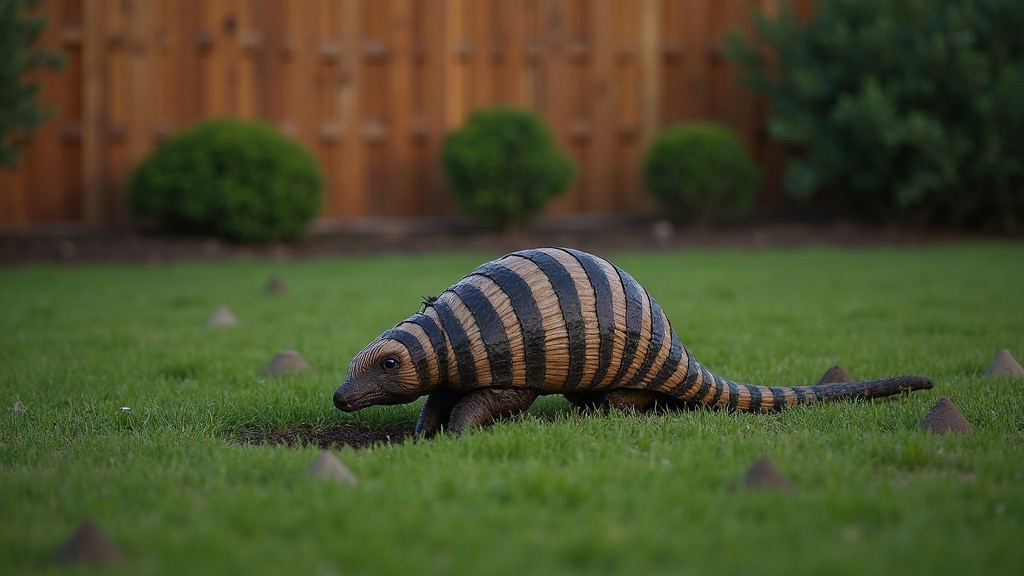
- Armadillos. Shaded, irrigated Fairhope lawns are prime grub-hunting ground, and burrows under old pier-and-beam foundations and AC pads are a recurring structural headache. Trapping along their travel lines is the fix; details on our armadillo page.
What wildlife removal costs in Fairhope
Pricing tracks the Mobile metro, with older homes pushing quotes toward the top of each range:
- Inspection: often free with the job, or $75–$150 standalone.
- Roof rat program (trapping + sealing): roughly $300–$900 depending on house size.
- Squirrel removal + sealing: roughly $250–$700.
- Raccoon removal: roughly $200–$750.
- Armadillo trapping: roughly $150–$500.
- Full exclusion on an older cottage: $1,500 and up, because the gap count is higher.
See the cost page for the full breakdown and the directory for verified companies serving the Eastern Shore. On an older home, insist that the quote list materials and warranty length in writing.
Other service areas
FAQ
Wildlife removal in Fairhope, AL: the short answers
I hear scratching at night in my Fairhope attic — squirrel or rat?
Timing helps: gray squirrels work dawn to dusk, so daytime noise is squirrels. Scratching and scurrying after dark suggests roof rats or raccoons — raccoons are noticeably heavier, more of a thump or walk than a scurry. Droppings at the inspection confirm it: rat droppings are rice-sized, squirrel droppings larger, raccoon latrines obvious.
Will trimming my oak trees keep squirrels off the roof?
It helps but won't solve it alone. Branches within six to eight feet of the roof are launch points, but squirrels also run power lines and fences, and they climb brick easily. Tree trimming plus metal exclusion at the roofline is the combination that actually holds.
Are armadillo burrows under my foundation dangerous?
They can be. A single burrow under a slab edge or AC pad is mostly a nuisance, but armadillos reuse and expand burrows, and under older pier-and-beam cottages the digging can undermine piers and skirting. Beyond trapping the animal, the burrow should be filled and the skirt line screened so the next one moves on.
Is it legal to trap nuisance wildlife myself in Alabama?
Homeowners have some latitude dealing with nuisance wildlife on their own property, but relocation rules are strict — especially for rabies-vector species like raccoons — and anyone doing the work for pay must hold an Alabama DCNR NWCO permit. In practice the trapping is rarely the hard part; the exclusion is where DIY jobs fail.
The animal isn't leaving on its own
Call now — speak with a local wildlife specialist serving Fairhope, Point Clear and the southern Eastern Shore. 24/7.