
Species guide — Gulf Coast
Snake Removal in Mobile & the Gulf Coast
Quick answer
Cost figures compiled from national cost data and published local pricing, September 2026. Every job is quoted after an inspection — treat these ranges as orientation, not a bid.
Talk to a local wildlife specialist now
Serving Mobile, Baldwin County and Pensacola — describe what’s going on and get matched by phone.
Call (251) 486-467124/7 — speak with a local specialist now.
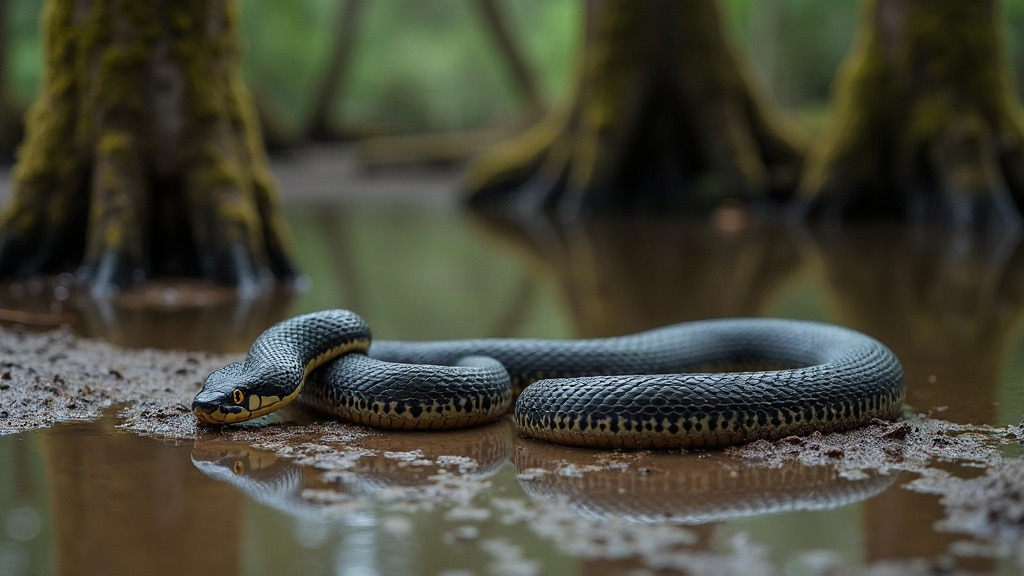
Venomous snakes of the Mobile–Pensacola area
Four venomous groups matter here. Treat this as orientation, not a field ID guide — when in doubt, assume venomous and back off.
- Cottonmouth (water moccasin) — heavy-bodied, dark, common around Mobile Bay creeks, drainage ditches and any standing water. Often holds its ground and gapes, showing a white mouth.
- Copperhead — tan with hourglass bands, the most common venomous bite source in the Southeast; loves leaf litter, wood piles and overgrown beds.
- Rattlesnakes — pygmy rattlesnake (small, gray, faint rattle) and, in woodlands, timber and Eastern diamondback rattlesnakes.
- Eastern coral snake — red, yellow and black banding ("red touch yellow, kill a fellow"). Rare and shy, but highly venomous; found in sandy, wooded areas.
Harmless lookalikes — banded water snakes, juvenile rat snakes — are routinely mistaken for cottonmouths and copperheads, which is exactly why ID should be left to someone who does it daily.
What to do when you find a snake
- Freeze, then back away slowly. Striking range is roughly half the snake's body length — give it several feet.
- Get kids and pets inside. Most bites happen when someone or some dog engages the snake.
- Outside and alone? Leave it. A snake in the open usually moves on within hours, and it's eating rodents while it's there.
- In the house, garage or pool cage? Close it off if you safely can, and call a removal pro — this is a same-day service call for most companies in our directory.
- If someone is bitten: call 911, keep the limb still and low, remove rings and tight clothing. No cutting, sucking, ice or tourniquets. Do not chase the snake — a phone photo from a safe distance is plenty for the ER.
How pros remove snakes — and keep them away
A single-visit removal is straightforward: the technician locates the snake (they're very good at hiding), captures it with tongs or a hook, and relocates it within legal limits. The follow-up matters more:
- Habitat work — removing wood piles, trimming ground cover, controlling rodents. Snakes follow food and cover; remove both and sightings drop sharply.
- Exclusion — sealing gaps under doors, around pipes and at the foundation keeps snakes out of the house itself. See wildlife exclusion.
- Snake fencing — buried, angled mesh fencing for properties backing onto wetlands, common in parts of Baldwin County and coastal Pensacola.
Note: glue traps and "snake repellents" sold in hardware stores have weak evidence behind them. Habitat and exclusion do the real work.
What snake removal costs
- Single snake removal visit: roughly $100–$300, depending on time of day and difficulty.
- Property inspection + habitat recommendations: often bundled, or $75–$150.
- Snake fencing / full exclusion: project-priced, typically several hundred dollars and up by footage.
More ranges on the cost page.
FAQ
Frequently asked questions
Is a snake in my yard dangerous?
Statistically, probably not — most Gulf Coast yard snakes are non-venomous rodent-eaters. But cottonmouths and copperheads are genuinely common near water and in leaf litter here, and visual ID from a distance is unreliable. The safe default: keep your distance, keep pets away, and get a pro if it's near doors or in the house.
How can I tell a cottonmouth from a harmless water snake?
Field marks people quote — triangular head, vertical pupils, swimming with the body on the surface — all have exceptions, and banded water snakes mimic cottonmouths convincingly. If you're close enough to check pupils, you're too close. Treat any thick-bodied snake near Mobile-area water as a cottonmouth until a pro says otherwise.
Do snakes come into attics or walls?
Occasionally — usually rat snakes following rodents. A snake in the attic almost always signals a rodent problem underneath it, so removal should come with a rodent and entry-point inspection.
Will animal control or the county remove a snake for free?
Generally no. County and city animal services in Mobile and Escambia County handle domestic animals; nuisance wildlife on private property is the homeowner's responsibility, which is why private removal companies exist. Details in our attic & wildlife guide.
When is snake season on the Gulf Coast?
Activity peaks from March through October; our mild winters mean snakes can be active in any warm week of the year. Expect the most sightings in spring (breeding, dispersing) and after heavy rains and tropical systems, when snakes get pushed out of flooded low ground.
Ready to get the animal out — and keep it out?
Call now — speak with a local wildlife specialist serving Mobile, Baldwin County and Pensacola. 24/7.