
Service guide — Gulf Coast
Wildlife Exclusion & Prevention in Mobile
Quick answer
Cost figures compiled from national cost data and published local pricing, September 2026. Every job is quoted after an inspection — treat these ranges as orientation, not a bid.
Talk to a local wildlife specialist now
Serving Mobile, Baldwin County and Pensacola — describe what’s going on and get matched by phone.
Call (251) 486-467124/7 — speak with a local specialist now.
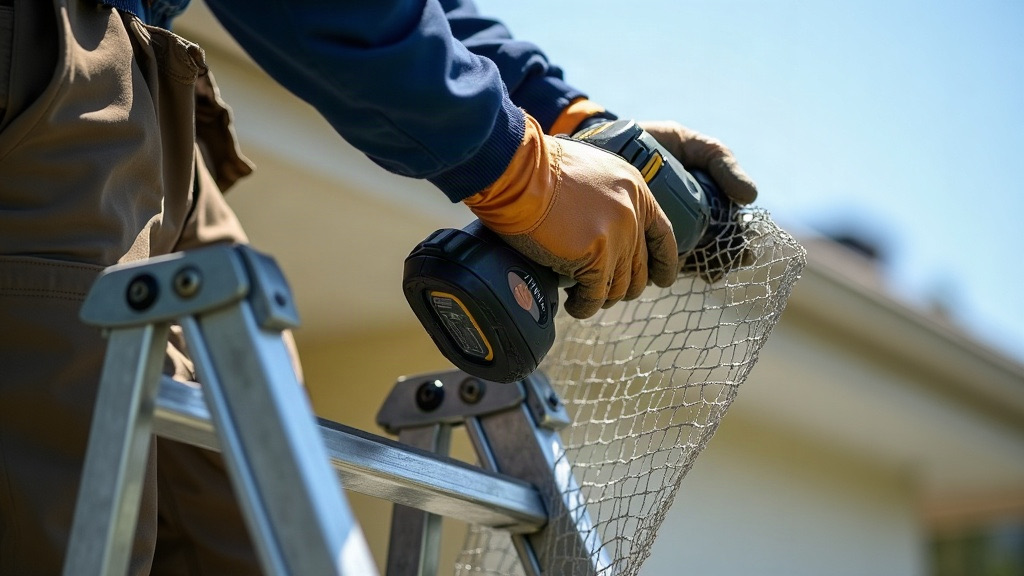
What a proper exclusion covers
A real exclusion job is a top-to-bottom audit of the building envelope. On Gulf Coast homes, the usual failure points are:
- Construction gaps at the roofline — the half-inch gap builders leave where roof decking meets fascia; squirrels and bats find it on day one.
- Soffit vents and returns — especially aluminum soffits loosened by storms; raccoons peel them open like a can.
- Gable and ridge vents — fine against weather, useless against animals until screened with hardware cloth.
- Roof returns and junctions — where a porch roof meets a wall, a classic squirrel door.
- Crawlspace vents and foundation gaps — opossum, skunk and armadillo territory.
- Plumbing and AC line penetrations — rats and snakes follow pipes straight through the wall.
Materials that survive wildlife
The difference between a one-year patch and a permanent seal is material choice:
- Galvanized hardware cloth (¼-inch, 19-gauge or heavier) over vents and gaps — the industry standard.
- Sheet-metal flashing and drip edge at rooflines and construction gaps.
- Heavy-gauge vent covers for gable and dryer vents.
- Mortar or concrete at foundation level where burrowing is the issue.
What fails: expanding foam alone (squirrels chew through in days), caulk on its own, plastic vent covers, and anything stapled loosely. If a quote doesn't specify materials, ask — it's the single best question you can ask an exclusion contractor.
What exclusion costs around Mobile
- Seal one or two known entry points: roughly $200–$500.
- Whole-house exclusion (average single-story): roughly $800–$1,500.
- Complex rooflines, two-story, tile or metal roofs: $1,500–$3,000+.
- Crawlspace encapsulation-style exclusion: project-priced.
Many companies warranty whole-house exclusions for one to five years — get the warranty terms in writing. Full ranges on the cost page; companies offering exclusion in the directory.
After a hurricane: the exclusion window
Every Gulf Coast tropical system redraws the map of wildlife entry points — lifted shingles, popped soffit panels, twisted ridge vents. The months after a storm are when attic infestations spike, because animals get displaced from damaged trees at the same moment homes develop new gaps. If you're scheduling roof repairs after a storm, add a wildlife exclusion inspection to the same visit: sealing gaps while the ladders and crews are already there is the cheapest exclusion you'll ever buy.
FAQ
Frequently asked questions
Is exclusion worth it if I don't currently have animals?
On the Gulf Coast, it's the most cost-effective wildlife money you can spend. Mobile and Pensacola have dense raccoon, squirrel and bat populations and year-round activity — "not yet" is the normal state of an unsealed attic here. A $1,000 seal-out beats a $2,500 removal-plus-restoration every time.
Can't I just stuff the holes with steel wool and foam?
Steel wool alone works temporarily for small rodent gaps, but foam by itself is squirrel and raccoon food — they chew straight through it. For anything larger than a dime-sized mouse gap, use hardware cloth or metal flashing mechanically fastened over the opening.
Should exclusion happen before or after removal?
During. The correct sequence is: seal all secondary gaps, install one-way doors on the active entries, confirm the animals are out, then seal the last openings. Sealing everything first traps animals inside — which turns a removal job into a dead animal job.
How long does a whole-house exclusion take?
Usually one to two days for a typical single-story home, longer for complex rooflines. Reputable companies back it with a written warranty — one to five years is the common range — and come back free if an animal breaches their work.
Does exclusion help with snakes?
Yes, at the foundation level: sealing gaps under doors, around pipes and at the slab keeps snakes out of the house itself. For the yard, exclusion pairs with habitat work — snake fencing, rodent control and cover removal. See our snake guide.
Ready to get the animal out — and keep it out?
Call now — speak with a local wildlife specialist serving Mobile, Baldwin County and Pensacola. 24/7.