
Species guide — Gulf Coast
Squirrel Removal in Mobile, AL
Quick answer
Cost figures compiled from national cost data and published local pricing, September 2026. Every job is quoted after an inspection — treat these ranges as orientation, not a bid.
Talk to a local wildlife specialist now
Serving Mobile, Baldwin County and Pensacola — describe what’s going on and get matched by phone.
Call (251) 486-467124/7 — speak with a local specialist now.
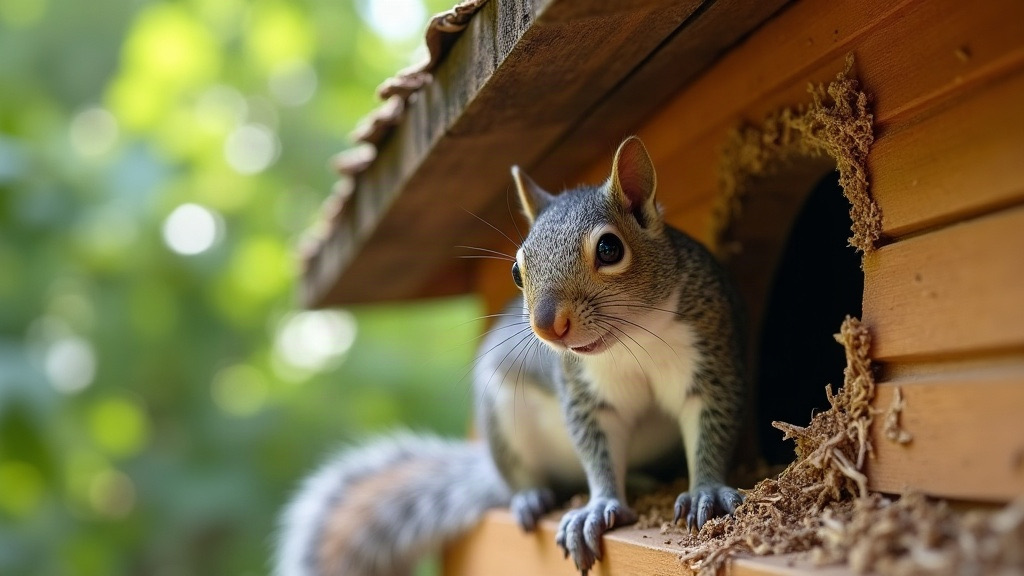
Gray squirrel or flying squirrel?
The timing of the noise tells you most of what you need:
- Morning and daytime scratching, rolling and scampering — eastern gray squirrels, Mobile's default attic squirrel. They chew baseball-sized holes in fascia and soffits, often right where a roofline meets a porch roof.
- Light, fast scurrying at night — Southern flying squirrels. They're common in wooded pockets of Spring Hill, Daphne and Fairhope, live in colonies of a dozen or more, and squeeze through gaps the size of a thumb.
Either way, the damage profile is the same: shredded insulation, droppings, and — the expensive one — gnawed electrical wiring, a genuine fire hazard.
How professional squirrel removal works
- Inspect the roofline for chew holes and rub marks, and the attic for nesting and wiring damage.
- Install a one-way door on the active entry so squirrels leave to forage and can't re-enter — or set humane traps if the situation calls for it.
- Seal every other gap with metal flashing and hardware cloth. Squirrels chew through foam, caulk and wood patch within days; only metal holds.
- Check for a nest — in late winter and late summer litters may be present, and the approach changes so pups aren't orphaned inside.
- Assess wiring and insulation damage and quote cleanup separately if needed.
What squirrel removal costs around Mobile
- Inspection: often free with the job, or $75–$150.
- One-way door + seal a single entry: roughly $250–$450.
- Multiple entries or trapping program: roughly $400–$700.
- Flying squirrel colony with full exclusion: typically $600–$1,200 because every small gap must be found and sealed.
See the full Gulf Coast cost breakdown and compare local companies in our directory.
Why squirrels love storm-damaged rooflines
Hurricanes and tropical storms loosen soffit panels, pop ridge vents and lift flashing — exactly the spots squirrels test first. After any storm that brought down limbs in your neighborhood, walk the perimeter and look up: a quarter-sized gap at the fascia is an open invitation. Pairing a roof repair with wildlife exclusion is the cheapest time to do both.
FAQ
Frequently asked questions
Will squirrels leave the attic on their own?
Rarely. An attic is a dry, predator-free den with insulation for nesting — there's no reason to leave, and in late winter and late summer there may be a litter anchoring the mother to the space. Repellents, lights and noise machines have a poor track record; removal plus metal exclusion is what actually works.
Do squirrels really cause house fires?
They're a documented ignition risk: squirrels gnaw constantly to keep their incisors worn down, and wiring insulation is a favorite target. If squirrels have been in your attic for more than a few weeks, ask the removal company to note any visible wire damage in their report and have an electrician look at anything chewed.
Can I just seal the hole while they're out?
That's the theory, but it fails two ways: you may seal a squirrel (or a nest of pups) inside, and a determined squirrel chews a new hole next to your patch within days. The correct sequence is one-way door first, confirm the attic is empty, then seal — in metal.
Are flying squirrels a bigger problem than gray squirrels?
Different, not bigger. Flying squirrels don't chew large entry holes and do less wiring damage individually, but they live in colonies — so where a gray squirrel job means one or two animals, a flying squirrel job can mean twenty, plus more droppings and more gaps to seal. They're also protected from casual harm in some contexts, so exclusion is the right tool.
How do I keep squirrels off the roof in the first place?
Trim branches back six to eight feet from the roofline, keep bird feeders away from the house, and make sure gable and ridge vents have intact screens. On the Gulf Coast the biggest single factor is tree cover — live oaks overhanging the roof are a squirrel highway.
Ready to get the animal out — and keep it out?
Call now — speak with a local wildlife specialist serving Mobile, Baldwin County and Pensacola. 24/7.